Solitaire:Classic Deluxe Cards
- 4.5
- Rating
- 1.00M
- Installs
- Free
- Price
 Analysis by App-foxy
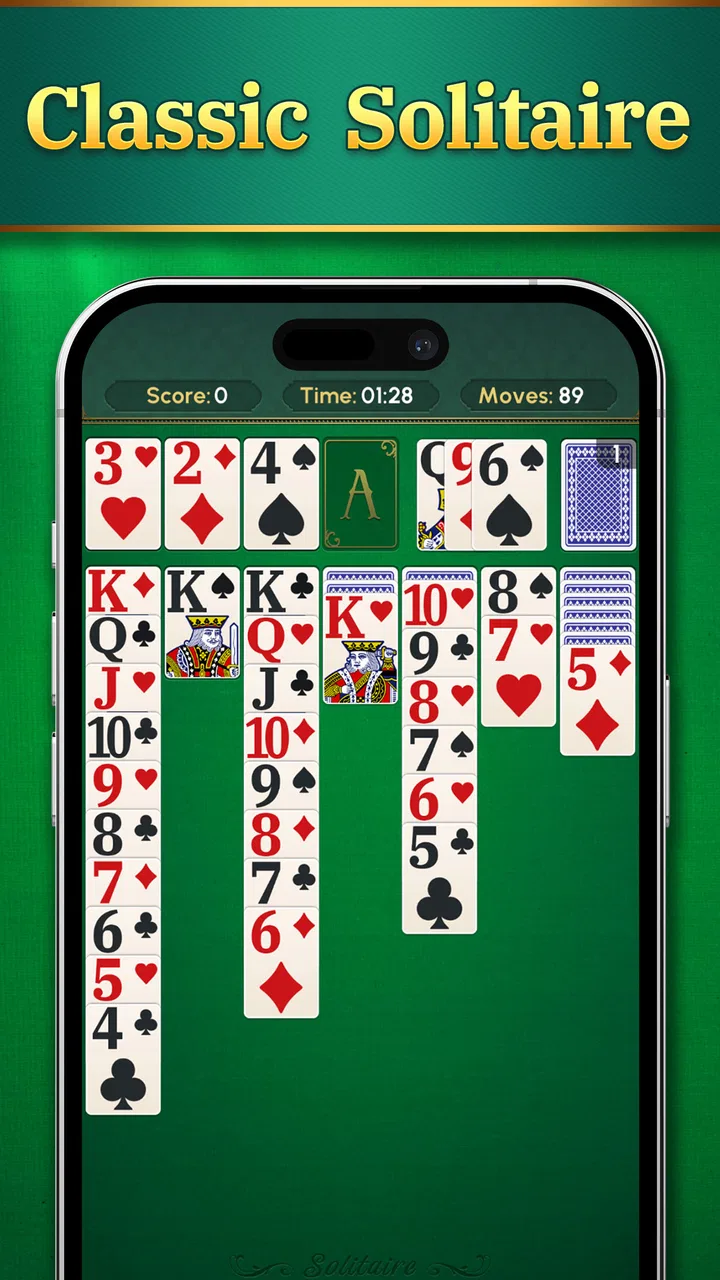
I spent time with Solitaire:Classic Deluxe Cards as a quiet, traditional card game rather than as a big, feature-heavy entertainment app. That distinction matters. This is the kind of solitaire experience I reach for when I have a few spare minutes, want something familiar, and do not feel like learning a complicated ruleset. The cards are large, the controls are easy to understand, and the presentation is designed to keep the focus on the layout instead of surrounding it with unnecessary distractions.
Developed by Chillapex Studio, this free card game has built a sizeable audience, with over one million installs and an average score of 4.4 from around thirty thousand ratings. Those figures suggest that its straightforward approach works for many players, but they do not tell the whole story. After using it, I see the appeal: it is approachable, readable, and comfortable for short sessions. At the same time, people looking for deep progression, a strong competitive scene, or a clearly documented spending model may want to look more carefully before making it their main card game.
What the everyday solitaire experience feels like
The first thing I noticed was how little effort it takes to begin playing. Solitaire is already familiar to many people, and this version does not put a complicated layer between opening the game and reaching the cards. The large-card presentation is especially helpful on a phone, where small symbols can quickly become tiring. I can identify suits and values without constantly pinching the screen or leaning closer, which makes a real difference during longer sessions.
You May Also Like

 Blood Strike: 2.5 Anniversary
Blood Strike’s Loadouts Turn Every Drop Into a Tactical Gamble
A close look at Blood Strike’s custom loadouts: how fast access to signature weapons reshapes its battle royale rhythm, rewards preparation, and narrows the gap between fights.

 Pandora - Music & Podcasts
Pandora’s Music Is Easy to Start, but Harder to Recover
Pandora’s strength is its low-effort path from a seed to a station. Its weak spot is how much confidence it asks you to place in connection, setup, and quiet recovery.

 8 Ball Pool
 Is Built on Rivalries, Rematches, and Routine
A close look at the rivalries, rematches, shared routines, and unanswered safety questions that turn a quick pool match into a persistent mobile community.

 Samsung Music
’s Quiet Strength Is Playing What You Already Own
Its reach comes less from spectacle than from dependable access to a personal library. That simplicity is both the app’s strongest retention engine and its ceiling.

 AccuWeather: Weather Radar
AccuWeather Review: A Quick, Clear Forecast for Everyday Decisions
For everyday plans, the best forecast is the one you can understand quickly. AccuWeather makes rain timing, radar, and local conditions easy to act on, with a few trade-offs.

 Hill Climb Racing
Why Hill Climb Racing Still Turns Crashes Into One More Run
A tiny car, a bumpy hill and one more upgrade: Hill Climb Racing keeps resurfacing because its simple chaos makes every near-miss feel personal.
More From Our News Desk



The basic rhythm is pleasantly calm. I scan the tableau, look for available moves, and decide whether to expose a hidden card or preserve a useful sequence. That sounds simple, but a comfortable interface changes how enjoyable those decisions feel. When cards are easy to read and taps respond smoothly, I spend my attention on the puzzle rather than on correcting accidental touches.
The visual themes also give the game a little more personality than a completely plain card table. I like having a choice of atmosphere when I am playing repeatedly, although themes are most useful as a way to reduce visual fatigue rather than as a reason to keep returning by themselves. The game remains fundamentally about arranging cards, so anyone expecting a dramatic campaign or a constantly changing world will find the experience intentionally modest.
The built-in hints are useful when I reach a point where I am unsure whether I missed an available move. I do not recommend using them automatically. Part of the satisfaction comes from checking the tableau carefully and spotting the answer myself. A better routine is to make a deliberate scan first, then use a hint as a second opinion. That preserves the thinking element while preventing a session from ending simply because one possible move was overlooked.
A practical way to play better
My most useful habit was to treat each move as a question about information, not just immediate progress. Exposing a face-down card is often more valuable than building a neat-looking stack, because it gives me more choices on the next turn. When two moves seem equally safe, I usually favor the one that opens a covered card or keeps more columns flexible.
Another small improvement is to pause before moving a card to a foundation pile. Sending cards upward feels like obvious progress, but a card can sometimes remain useful in the tableau for building another sequence. I found that thinking one move ahead made the game more satisfying and reduced the feeling that I was simply tapping every available option.
This is also where the large cards help. I can review the whole layout quickly, compare suits, and notice blocked columns without fighting the interface. For older players or anyone with less comfortable eyesight, that clarity may be more important than decorative polish. It also makes the game suitable for a short break at a kitchen table, on public transport, or while waiting for an appointment.
Where the free model fits into the experience
The game costs nothing to download, which makes it easy to try without committing money first. That is a genuine strength for a classic card title, because many people only need a reliable solitaire table and do not want to pay before discovering whether the controls suit them. The age classification is Everyone, so it is also positioned as a broadly accessible choice rather than a game aimed at a narrow audience.
Still, “free” should not be treated as a complete description of the spending experience. I did not find enough confirmed purchase information to make a precise claim about optional payments, their prices, or how they affect play, so I would not present the game as definitively free of monetization. My practical advice is simple: if spending matters to you, check the purchase screen and device settings before handing the phone to a child or leaving an account available for one-tap transactions.
That caution is not an accusation. It is just sensible when a game is free to start. The important point is that the core reason to install it is the card play itself, not a promise of rewards or a paid shortcut. I would judge any optional spending by whether it changes convenience or presentation while leaving the puzzle fair. If a player dislikes the possibility of purchase prompts altogether, a paid solitaire app with a clearly stated one-time cost may be a better fit, even if it offers fewer themes.
Progress without turning every session into pressure
Solitaire works best for me when it remains a low-pressure activity. I can stop after one layout without feeling that I have abandoned a team, missed a timed event, or damaged a long-term account. That makes this game a good companion for fragmented time. A ten-minute session can still feel complete, and a failed deal does not have to become an evening-long commitment.
The trade-off is that a classic card game can feel repetitive once the basic challenge becomes familiar. The changing layouts provide the main variation, while themes and hints adjust the presentation and difficulty of individual sessions. Players who need a visible sense of advancement may eventually want something with missions, leagues, unlockable collections, or a broader progression system. I would not install this expecting those systems to be the heart of the experience.
There is also a useful difference between healthy persistence and pressure. I enjoy replaying a difficult layout because I want to understand where my choices went wrong. I enjoy it less when I feel pushed to continue simply to protect a streak or chase a reward. This title is most appealing when I set my own stopping point. If your preferred card games rely on daily obligations, escalating challenges, or competitive ranking, this quieter format may feel too restrained.
Fairness and the question of competition
For a traditional solitaire game, fairness is mostly about whether the player can make decisions based on visible information and whether the result feels like a puzzle rather than a spending contest. The appeal here is that the focus stays on personal play. I am not comparing a deck, character, or collection with another person, so there is less opportunity for the usual competitive imbalance between players who spend and players who do not.
That does not mean every deal will feel equally satisfying. Solitaire naturally includes layouts that are easier to solve than others, and a player can make a poor choice early without realizing its consequences until much later. I try not to interpret a loss as evidence that the game is unfair. Instead, I review the first few decisions: did I expose a hidden card, preserve an empty column, or move a sequence too quickly? That approach makes the result feel connected to my play rather than to luck alone.
Players who want head-to-head competition should understand the limitation of this format. It is not the right choice if your main goal is to test skill against live opponents, compare scores with a community, or build a public competitive identity. A dedicated multiplayer card game would be better for that purpose. Here, fairness is personal and local: the question is whether the layout gives me a reasonable puzzle and whether optional convenience avoids replacing thoughtful play.
I also prefer not to use hints as a way to rush through every difficult moment. If a hint is always available and I use it immediately, the game becomes more like following instructions than solving a layout. For a fair personal challenge, I use hints only after making a serious attempt. That creates a useful middle ground for beginners: assistance is available, but it does not have to erase the decision-making.
Who will appreciate it most
I would recommend this game to someone who wants recognizable solitaire on a phone, readable cards, and a relaxed interface. It suits casual players, people returning to card games after a long break, and anyone who wants an activity that can be paused mentally as well as physically. The Everyone rating reinforces that broad appeal, while the minimum requirement of Android 7.0 means it is not restricted to only the newest Android devices.
A realistic example is a short waiting period before an appointment. I can open a layout, make a few careful moves, and put the phone away without needing to remember a complicated story or coordinate with anyone else. On a quiet evening, I might play several rounds while listening to something in the background, using the themes to keep the table from feeling visually stale. The game works because it respects those small pockets of time.
It may also be a good option for someone who finds smaller card interfaces frustrating. Large cards are not merely a cosmetic choice; they reduce the effort needed to distinguish suits and values. That can make the difference between relaxing with solitaire and abandoning it after a few mis-taps. I would still suggest trying the controls personally, because comfort depends on screen size, eyesight, and preferred touch habits.
Who should choose another kind of card game
I would skip this one if you need a rich reward structure to stay motivated. The traditional format has limited room for character development, narrative, or strategic deck construction. It is also not the best match for players who want constant novelty. A collectible card game, puzzle campaign, or online multiplayer title will offer more variety, though usually with more rules, more visual noise, or more pressure to keep up.
It may also disappoint people who want complete transparency around spending before they begin. The game is free, but that alone does not answer every question about optional purchases or how they appear during use. I would inspect the relevant store and device controls if that issue is important to you. Someone who wants one clearly defined payment and no uncertainty may prefer a paid alternative with a simpler commercial model.
Finally, players who dislike hints may find them unnecessary rather than helpful. They are a convenience, not a substitute for learning solitaire strategy. I see them as a safety net for a tired player or a newcomer, but experienced players may prefer to ignore them and judge each layout unaided. That flexibility is useful, although it means the quality of your session partly depends on how much assistance you allow yourself.
What I would check before settling on it
The current version is 1.15.0, so I would install it and spend enough time with several layouts before deciding whether the card spacing, touch response, and visual style suit me. A quick launch can show the general presentation, but it cannot reveal whether the interface remains comfortable after repeated play. I would also test the hint behavior in a low-stakes game rather than using it during a layout I am trying to solve seriously.
I would pay attention to how the game fits into my own routine. If I want a calm, self-contained activity, it makes sense. If I want a competitive ladder, social interaction, or a complicated long-term goal, I would stop looking here and choose a different category of card game. This is an important distinction because a simple app is not automatically lacking; it is simply designed around a narrower kind of enjoyment.
I would also make a deliberate decision about spending before playing regularly. Since the download is free and the confirmed information does not establish a detailed purchase structure, I would avoid assuming that every optional element works the same way as in another solitaire app. Checking the purchase flow directly is more useful than relying on expectations. That small step protects the “casual and uncomplicated” experience that makes the game attractive in the first place.
My trust verdict after playing
My overall impression is positive, with realistic boundaries. Chillapex Studio has made a card game that understands the value of clear presentation and quick access. The big-card layout, smooth-feeling play, themes, and hints make it easy for me to settle into a familiar solitaire session. Its strong audience response, including a 4.4 average from around thirty thousand ratings, supports the view that this uncomplicated approach has found its audience.
What I trust most is the straightforward purpose. I know why I am opening it: to play solitaire, not to manage a complicated collection or follow a demanding schedule. What I would keep in mind is the usual free-game caution around spending. I would review any purchase prompts myself, especially on a shared device, rather than assuming that “free” describes every possible part of the experience.
My recommendation is to try it if you want readable, low-pressure solitaire and value convenience over depth. It is a particularly sensible choice for short breaks, relaxed solo play, and players who appreciate large cards. I would choose another option for serious competition, elaborate progression, or a fully established one-time-payment model. Within its intended space, though, this is an approachable and pleasant card game that does not need to pretend to be more than it is.
FAQs for Solitaire:Classic Deluxe Cards
01What features does Solitaire: Classic Deluxe Cards offer?
Solitaire: Classic Deluxe Cards offers a variety of features to enhance your gaming experience. These include customizable card designs, daily challenges, and various difficulty levels. The game also provides an intuitive interface and smooth animations, making it appealing for both new and seasoned players. Additionally, you can track your statistics and progress over time.
02Is Solitaire: Classic Deluxe Cards free to play?
Yes, Solitaire: Classic Deluxe Cards is free to download and play. However, it does offer in-app purchases for additional features and customization options. These purchases are entirely optional and are designed to enhance the gameplay experience. You can enjoy the full core game without spending any money.
03Does Solitaire: Classic Deluxe Cards require an internet connection?
Solitaire: Classic Deluxe Cards can be played offline, which makes it perfect for playing on the go without the need for a constant internet connection. However, accessing certain features like daily challenges and leaderboards will require connection to the internet. Offline play ensures you can enjoy the game anytime, anywhere.
04How can I customize my game in Solitaire: Classic Deluxe Cards?
The game offers several customization options to personalize your playing experience. You can choose from various card backs, themes, and table designs. Additionally, you can adjust settings such as sound effects and hints to suit your preferences. These options allow you to tailor the game to your liking and make each session unique.
05Are there any ads in Solitaire: Classic Deluxe Cards?
Yes, the free version of Solitaire: Classic Deluxe Cards includes ads. These advertisements help support the developers and keep the game free for users. If you find the ads intrusive, there is an option to purchase an ad-free version within the app. This provides a seamless gaming experience without interruptions.
Pros
- Smooth and intuitive interface.
- Variety of card designs available.
- Offline play without interruptions.
- Daily challenges boost engagement.
- Quick load times enhance experience.
Cons
- Ads can be somewhat intrusive.
- Limited customization options.
- No multiplayer or social features.
- In-app purchases for themes.
- Occasional minor bugs.

Solitaire:Classic Deluxe Cards
Gallery